


Roman Village La Olmeda
Cave of the French
Mineria de Barruelo Museum
Marshes Route
Birdwatching
Ruta de los Pantanos
Basket of Saffron Milk Caps
Gloves Cave
What to see
See and do in the Palencia Mountain.
Click for more information
- Villa Romana La Olmeda
- Los Chozos de Villafría
- Cueva de los Franceses
- Mining Museum of Barruelo
- Tourist Activities in Berrea
- Route of the Reservoirs
- European Bison Interpretation Center
- Equestrian Activities
- Ethnographic and Photographic Museum Piedad Isla
- Bee Museum in Castrejón de la Peña
- Ursi Museum in Aguilar de Campoo
- Ratoncito Pérez Route
- Museum of Rural Architecture and Ethnography in Cervera de Pisuerga
- Private Geological Exhibition in Cervera de Pisuerga
- Park House of Cervera de Pisuerga.
- Herminio Revilla Museum and Workshop House
- Cueva de Agudín
- ROM Museum Santa María La Real Aguilar de Campoo
- Natural Space of Covalagua
- UNESCO Global Geopark Las Loras
- Palentina Mountain Natural Park
- Collegiate Church Museum San Miguel Arcángel
- Santibañez de la Peña
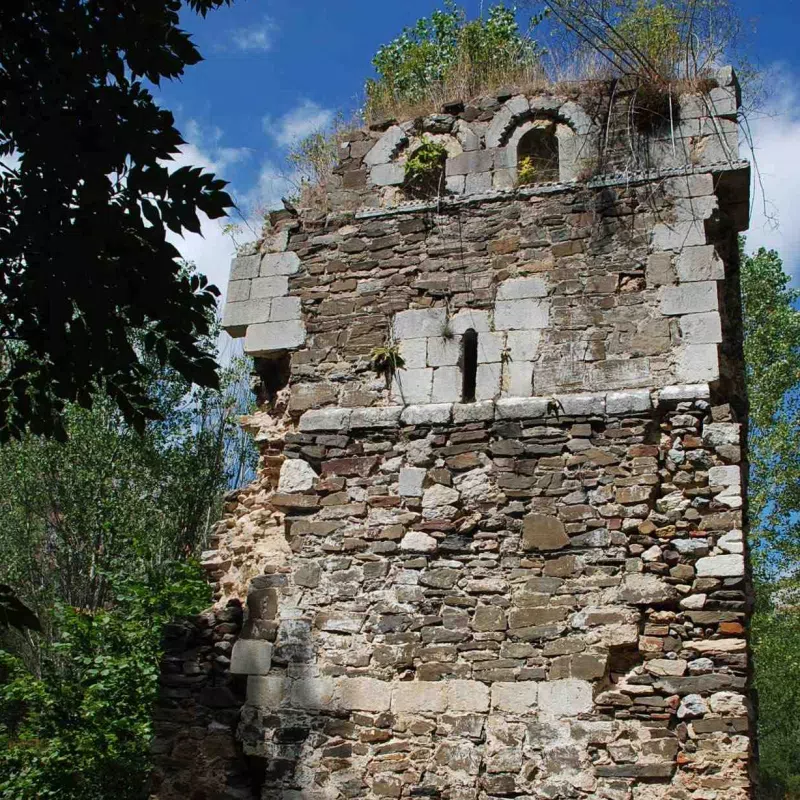
San Roman Tower
The Tower of San Román rises near Santibañez de la Peña, as the only remnant of an ancient 10th-century monastery. This site, surrounded by a unique landscape full of freshness and water, is ideal for a hiking route. Santibañez de la Peña, with its thirteen villages, offers a unique charm in the Palencia Mountain.
Venturing into its hills, you will find the remains of the Monastery of San Román de Entrepeñas, which had significant economic and social influence. Although in ruins and privately owned, the tower retains its mystique, with traces of Romanesque art in its structure.
To reach it, start from the Barrio de La Estación in Santibañez de la Peña and follow the path through the trees to the stream, which will guide you to the tower, hidden among the vegetation.

Mirador de Alba de los Cardaños: A Paradise in the Palencia Mountains
In the heart of the Montaña Palentina, the viewpoint of Alba de los Cardaños stands as one of the most beautiful spots in the province. Located next to the Camporredondo reservoir, in the municipality of Velilla del Río Carrión, this picturesque enclave is closely linked to the history of the reservoir, whose construction began in 1914 and was completed in 1930. This project transformed the region, allowing for new crops such as corn and beetroot.
Situated on the P-210 road, the viewpoint offers dreamlike sunsets with views of the Espigüete and Peña Redonda peaks, icons of the Montaña Palentina. It is an essential stop on the route of the Reservoirs, a 70-kilometer journey that encompasses several reservoirs. This environment is a haven for nature and gastronomy lovers.
The viewpoint, with its privileged location, is ideal for photography and the contemplation of panoramic views. It features ample parking and a restaurant with a bar. An informative sign helps identify the points of interest visible from this strategic location.
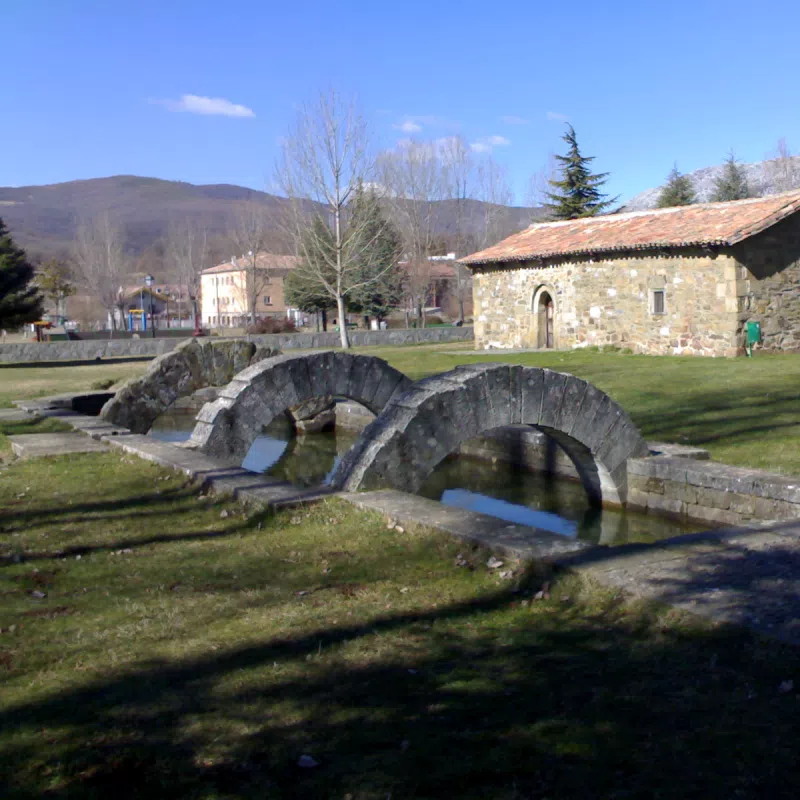
Discover the Enigmatic Fountain of La Reana
Velilla del Río Carrión hosts a spring that flows without a predictable pattern. Located in the heart of the town, it is easily recognizable by the stone arches surrounding it. Without a clear scientific explanation, its behavior remains a mystery. Although one would expect the water to flow more during the rainy season, reality has proven otherwise over the centuries. Even in the height of summer, the water can gush abundantly or disappear without warning, keeping its enigma intact.
Also known as Fuentes Tamaricas, this spring is a symbol of Velilla del Río Carrión. Mentioned by the Roman historian Pliny the Elder, its peculiarity of emptying and filling without apparent reason has fascinated people since Roman times. Declared a Provincial Monument in 1961 and a Site of Cultural Interest in 2002, the spring is a rectangular pond with three stone arches, of which only one is original. When it fills, an underground noise announces the process, and its drains channel the water for local irrigation. Nearby, the 12th-century hermitage of San Juan adds a historical touch to this place full of mystery and mysticism.
Also known as Fuentes Tamaricas, this spring is a symbol of Velilla del Río Carrión. Mentioned by the Roman historian Pliny the Elder, its peculiarity of emptying and filling without apparent reason has fascinated people since Roman times. Declared a Provincial Monument in 1961 and a Site of Cultural Interest in 2002, the spring is a rectangular pond with three stone arches, of which only one is original. When it fills, an underground noise announces the process, and its drains channel the water for local irrigation. Nearby, the 12th-century hermitage of San Juan adds a historical touch to this place full of mystery and mysticism.

Sanctuary of the Virgen del Brezo
Discover the Sanctuary of the Virgin of Brezo, a place of deep devotion in Villafría de la Peña. This iconic sanctuary is the chosen destination for many couples to celebrate their marriage, maintaining a tradition that has endured for decades. Every September 21st, the festival of the Virgin of Brezo comes alive with a vibrant pilgrimage that attracts visitors from all over the Montaña Palentina and beyond.

Spring of Villafría de la Peña
Discover a perfect spot to enjoy with family or friends. This place, especially appreciated in summer, offers a spring and a stream of cold water all year round. Ideal for sharing a meal in a group, it features picnic areas, a shelter, and cool shaded areas.

Discover the Compuerto Reservoir
The Pantano de Compuerto is the first in a series of reservoirs in the north of Palencia, in the heart of the Montaña Palentina. Just 9 kilometers from Velilla del Río Carrión, this reservoir, completed in 1960, is fed by the waters of the Carrión River, offering a landscape of pure nature.

Discover the Camporredondo Reservoir
The Camporredondo reservoir, located in Velilla del Río Carrión, is a jewel in the Alto Carrión region, Palencia. From the majestic Espigüete peak, you can admire its beauty. This reservoir, along with the Compuerto reservoir, regulates the waters of the Carrión River, extending for almost 200 km to the Pisuerga. Inaugurated in 1930 by Alfonso XIII, its history and natural surroundings make it an essential destination within the Montaña Palentina Natural Park. It is part of the famous "Route of the Reservoirs," attracting thousands of visitors each year.

Discover Otero de Guardo
Otero de Guardo is a charming village in the Montaña Palentina, part of the municipality of Velilla del Río Carrión, Palencia. Situated at an altitude of 1,244 meters, this picturesque place is located on the shores of the Compuerto reservoir, just 9 km from Velilla. With a rich history dating back to 1352, Otero de Guardo has witnessed significant events, such as a fire in 1918 and the arrival of electricity in 1920. Its heritage includes the church of San Salvador, with Romanesque elements, and a submerged Roman bridge. It celebrates its festivities in honor of San Isidro and San Justo and San Justillo.

Discover the Charm of Puente Agudín
Puente Agudín is a picturesque bridge and recreational area located in the north of the province of Palencia, near Cardaño de Abajo, in Castilla y León, Spain. Known for hosting the Day of Fuentes Carrionas and La Montaña Palentina, a festival held on the third Sunday of July since 1972, it is a key cultural and tourist spot. This event celebrates the natural beauty of the surrounding mountains and promotes local traditions such as folk music and the preparation of "caldereta," a traditional shepherd's stew. The festival offers activities like mountain races, contests, and guided tours, attracting locals and tourists alike. Puente Agudín, with its stunning landscape in the Montaña Palentina Natural Park, is a popular destination for nature lovers and hikers. Additionally, it serves as a gateway to explore the rich history and nature of the Palencia region.

High Viewpoint of La Varga
Explore the Mirador Alto de la Varga, an impressive spot in the province of Palencia, Castilla y León, at an altitude of 1,413 meters. Located on the reservoir route, it offers unparalleled panoramic views of mountains and valleys. Situated between Santibáñez de Resoba and La Lastra, this viewpoint is on the watershed between the Pisuerga and Carrión rivers. Perfect for hiking enthusiasts, the area is filled with mountain trails, such as the path of the Giant of the Narrow Valley.

Explore the Charm of the Cervera de Pisuerga Reservoir
In the heart of the province of Palencia, the Cervera de Pisuerga Reservoir stands as a true natural treasure in the Palencia Mountain. Situated on the Pisuerga River, this reservoir offers a perfect setting for nature lovers and hikers, being an integral part of the Palencia Mountain Natural Park. Conceived to regulate the river's flow and generate hydroelectric power, the reservoir is an example of harmony between infrastructure and nature. Surrounded by majestic mountains and lush forests, it is ideal for recreational activities such as fishing, boating, and water sports like canoeing. Access is easy from Cervera de Pisuerga, well connected by road, and it features various tourist infrastructures. From the National Parador of Cervera de Pisuerga, you can enjoy impressive views of the reservoir and the surrounding mountains.

Discover the Vidrieros Reservoir
The Vidrieros Reservoir is a hydraulic gem in the province of Palencia, part of the regulation system of the Pisuerga River. Built between the 1960s and 1970s, its main function is to regulate the river's flow, prevent flooding, and generate hydroelectric power.
Location: Situated near Vidrieros, in San Cebrián de Mudá, in the Palencia Mountain.
Characteristics: With a capacity of 20 cubic hectometers, its 50-meter dam takes advantage of the mountainous drop for energy generation.
Uses: Besides hydroelectric power, the reservoir provides water for irrigation and offers a natural setting ideal for fishing and hiking.
It is part of the Palencia Mountain Natural Park, noted for its natural beauty and biodiversity.

Discover the Casa del Parque Montaña Palentina
The Casa del Parque de Cervera de Pisuerga is an interpretation center located in the heart of the Cervera Mountains, Palencia. Its mission is to reveal the rich natural and cultural heritage of the region, promoting environmental conservation.
Inside, visitors can explore a permanent exhibition that highlights the flora, fauna, geography, and ecosystems of the natural park. Additionally, it presents local history and traditions, showcasing the influence of nature on the lives of the inhabitants.
The Casa del Parque organizes activities throughout the year, such as guided tours, environmental workshops, and bird watching. It also offers an educational space for schoolchildren, fostering ecological awareness from an early age.
In addition to its exhibitions, the center offers services such as the sale of informational materials, maps, and local products. Rest areas allow visitors to enjoy the serenity of the surroundings.
This center is ideal for lovers of ecotourism, nature, and the rural culture of northern Palencia. Don't miss the impressive "Pintojo," a naturalized bear that adds a special touch to the visit.

Discover Moarves de Ojeda
Have you ever wondered why there is so much Romanesque architecture here? Experts attribute it to the economic history of the region. In times of prosperity, old parishes were demolished or remodeled, but in Moarves de Ojeda, this practice allowed for the preservation of genuine architectural treasures.
The Church of San Juan Bautista, from the 12th century, is an impressive example. Its sculpted frieze on the south portal, featuring a Pantocrator and the twelve apostles, is a gem for art lovers. The checkered archivolts reflect the influence of the French Way of Saint James, and the capitals showcase the mastery of the sculptors of the time. Inside, a 13th-century baptismal font adds a touch of living history.
The Church of San Juan Bautista, from the 12th century, is an impressive example. Its sculpted frieze on the south portal, featuring a Pantocrator and the twelve apostles, is a gem for art lovers. The checkered archivolts reflect the influence of the French Way of Saint James, and the capitals showcase the mastery of the sculptors of the time. Inside, a 13th-century baptismal font adds a touch of living history.

Discover the Las Loras Geopark
The Las Loras Geopark is a geological gem in the north of Palencia, Castilla y León, Spain. Covering more than 1,500 square kilometers, it stands out for its spectacular geology and rich biodiversity, with unique formations millions of years old. Among its wonders, the cliffs near the Cueva de los Franceses offer a diversity of fascinating rock strata and fossils. This natural environment is a paradise for nature lovers, hikers, and photographers, hosting protected species such as the griffon vulture and the bearded vulture. The geopark promotes the conservation of geological heritage, sustainable tourism, and education on geodiversity. As part of the UNESCO global network of geoparks, it is a benchmark in preserving its valuable natural environment. Additionally, it boosts the local economy through ecotourism and educational activities, enriching the knowledge and enjoyment of its surroundings.